EOT & Overhead Cranes
Underslung EOT Crane
An underslung EOT crane hangs from your roof structure instead of standing on runway columns. Its end carriages run on the bottom flange of the runway beams — freeing floor space and covering bays that a top-running crane can't reach.
◆ Quick specification ◆
- SWL
- 0.5 – 15 t typical
- Span
- Up to 25 m
- LT speed
- Up to 20–40 m/min
- Hoisting
- Up to 8 m/min
- Girder
- Single or double
- Control
- Pendant / radio
Underslung EOT Crane overview
Unlike top-running cranes that travel on rails mounted on top of the runway beams, an underslung (under-running) crane is typically suspended directly from the roof or ceiling structure. Its bridge can also be designed with a cantilever at one or both ends, so the hook reaches closer to the side walls than a top-running crane can.
This makes underslung cranes ideal for facilities where headroom is limited, where the building cannot support the columns a top-running system needs, or where an existing roof structure is strong enough to carry the crane. They impose less dead load on the building and are usually simpler and faster to install in an existing shed.
Key features of our Underslung EOT Crane
Space optimisation
Hangs directly from the roof structure, maximising vertical space in low buildings.
Lightweight construction
Generally lighter than a top-running crane, so less dead load on the building.
Wide coverage
Covers the full bay width with excellent side approach; cantilever ends extend reach.
Smooth, precise motion
VFD-controlled travel for gentle starts and stops with delicate loads.
Easy installation
Simpler and faster to install than top-running cranes, especially in existing buildings.
Versatile
Single or double girder, various hoist types and control options.
Underslung EOT Crane specifications
| Capacity (SWL) | 0.5 t to 15 t (custom designs available for higher capacities) |
|---|---|
| Span | Up to 25 m (more depending on capacity and building) |
| Lift height | As per requirement, optimised for available headroom |
| Crane travel speed | Up to 20–40 m/min with VFD |
| Hoist (CT) travel speed | Up to 20 m/min, VFD available |
| Hoisting speed | Up to 8 m/min; dual speed / VFD options |
| Control | Pendant (standard); radio remote optional; cabin for specific applications |
| Duty class | Class II, III, IV as per IS 3177 / IS 807 or other relevant standards |
| Motors | Energy-efficient TEFC squirrel cage induction |
| Safety | Overload limiter, emergency stop, limit switches on all motions; anti-collision optional |
Specifications are indicative. Final design is confirmed with your technical offer; the manufacturer reserves the right to improve specifications.
Options
- Radio remote control
- Anti-collision devices
- Dual speed hoisting
- Cantilever bridge ends
- Double girder construction
Applications
- Assembly lines and manufacturing plants
- Warehouses and storage
- Maintenance and repair workshops
- Loading and unloading bays
- Power plants and utility stations
- Automotive and general engineering
Underslung EOT Crane – frequently asked questions
What is an underslung EOT crane?
It is a bridge crane whose end carriages run on the bottom flange of runway beams, usually suspended from the roof, instead of running on rails on top of the runway.
When should I choose an underslung crane over a top-running crane?
When headroom is limited, when the building cannot support runway columns, or when you need the hook to reach close to the side walls.
What capacity can an underslung crane handle?
Typically 0.5 t to 15 t with spans up to 25 m. Custom designs for higher capacities are possible, subject to the roof structure.
Will my roof structure carry the crane?
The building structure must be checked by your structural consultant for the crane loads. We provide the wheel loads and reactions needed for that check.
Applications
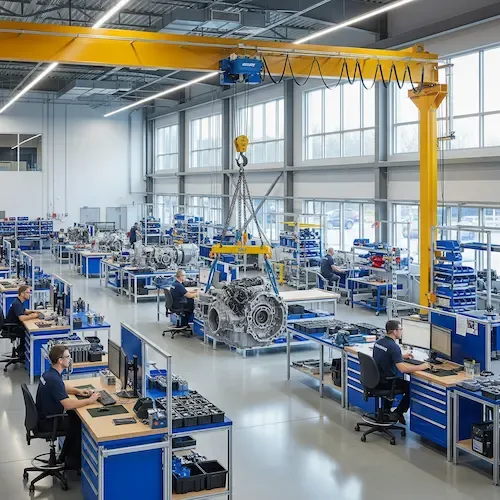
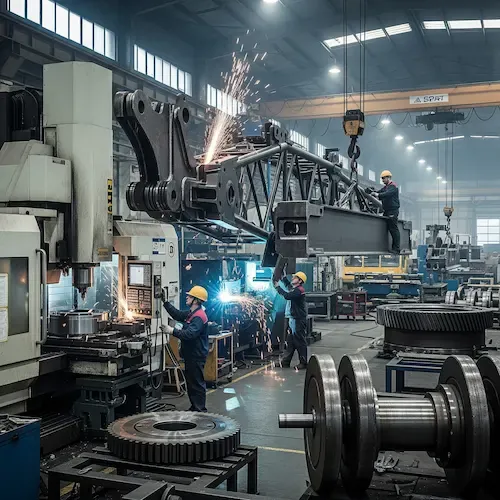
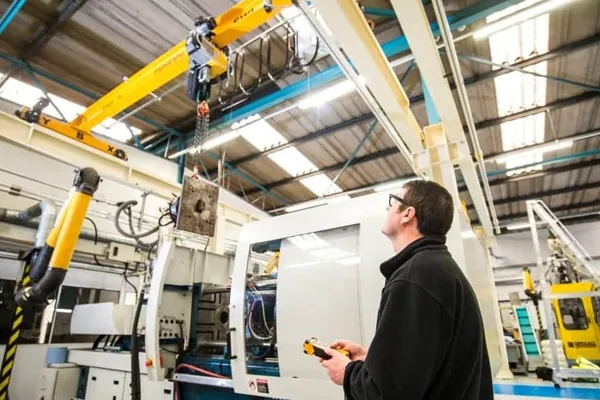
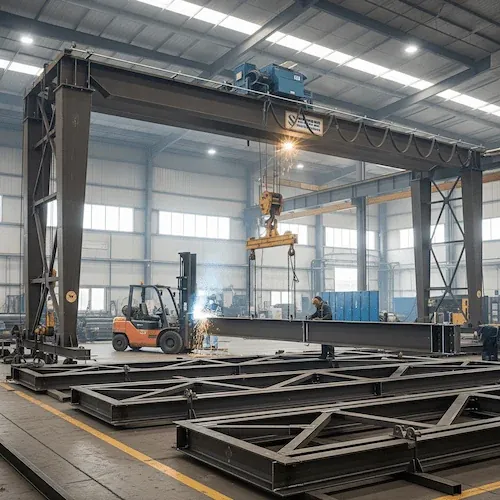
Industries that use our Underslung EOT Crane
See how we configure lifting equipment for the specific demands of each industry.
Explore more
Related cranes & equipment

Single Girder EOT Crane
Economical overhead crane with one main girder and an underhung wire rope hoist.
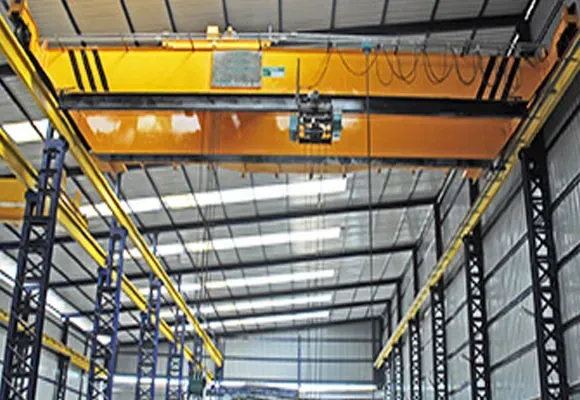
Overhead Cranes
Top-running, underslung, single and double girder overhead crane systems.
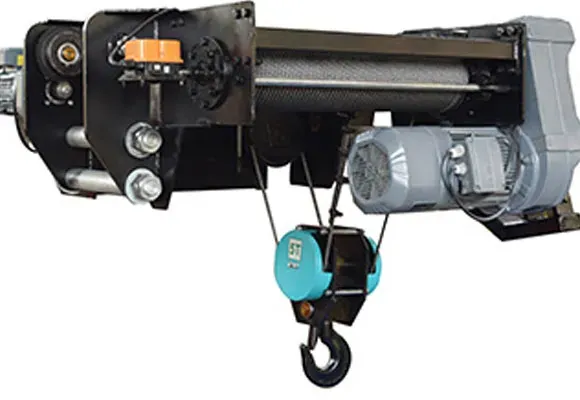
Low Headroom Wire Rope Hoist
Offset-machinery hoist that wins back lift height under low roofs.
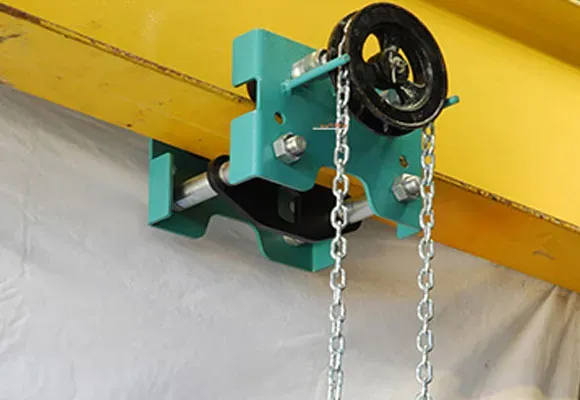
Monorail Travelling Trolley
Geared or push-pull trolleys, 0.5 t to 20 t, for chain blocks and hoists.
