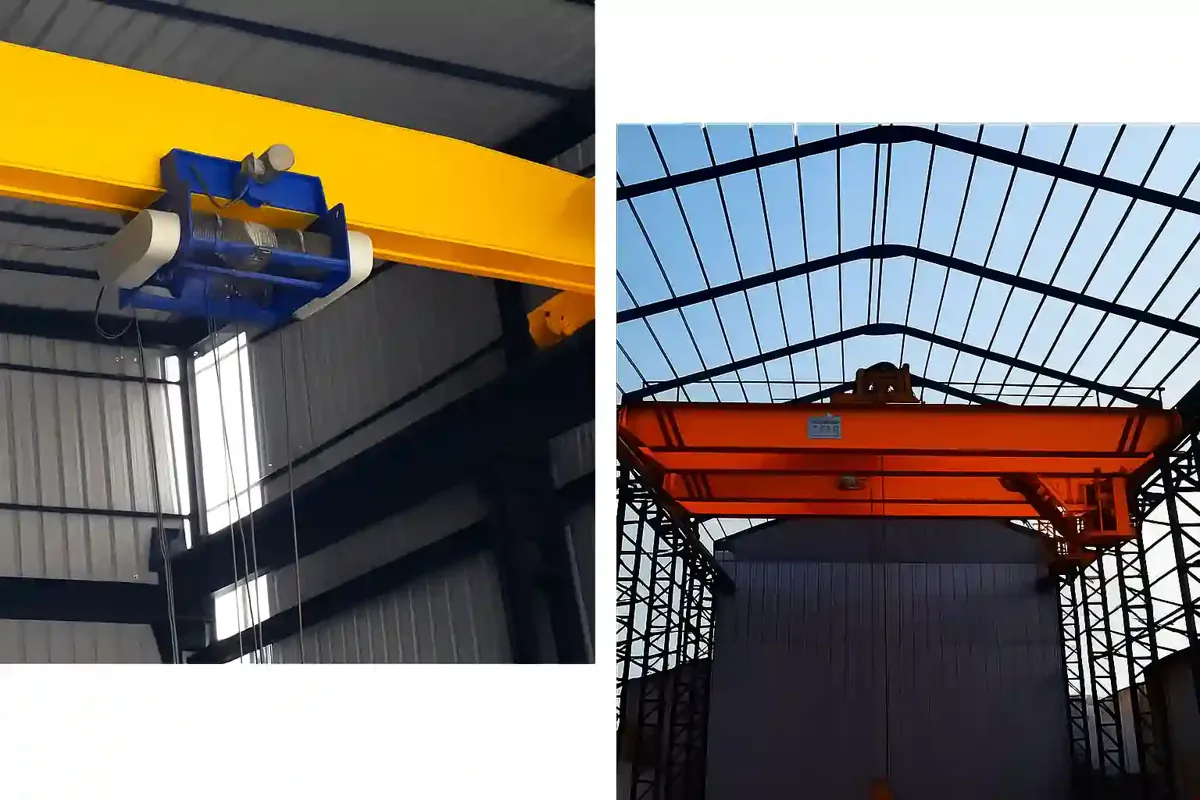
Two EOT crane quotations can look similar and still describe very different machines. The best way to get accurate, comparable offers is to send every supplier the same clear specification. Here are the eight things to define.
1. Capacity (safe working load)
The heaviest load the crane must lift, including any lifting attachment such as a lifting magnet or lifting beam. Allow for future growth — upgrading a crane later costs more.
2. Span
The centre-to-centre distance between the runway rails. Span strongly influences girder design and the choice between single and double girder.
3. Height of lift
From the floor (or pit) to the highest hook position you need. Also measure the clear height from rail top to the lowest roof obstruction — it decides whether you need a double girder crane or a low headroom hoist.
4. Duty class
How often and how heavily the crane works. EOT cranes are classified M5 to M8 under IS 3177 / IS 807. Describe your use honestly: lifts per hour, hours per day, and how often loads are near capacity.
5. Speeds
Hoisting, cross travel and long travel speeds. Faster is not always better — for moulds, machines and precise assembly, dual-speed or VFD control is often more valuable.
6. Control
Floor pendant push buttons (standard), radio remote control, or a cabin with master controllers for long spans and hot areas.
7. Power supply
Voltage and phase available, and the DSL type: shrouded bus bars, trailing cable, MS angle iron or bare copper conductors. Mention any hazardous-area classification — it changes everything electrical (see flame proof cranes).
8. Building and runway data
Length of travel, existing gantry girders and rails (size and condition), column positions, and any obstructions. For new buildings, ask for wheel loads early so your structural consultant can design the runway.
Don't forget testing and support
Ask how the crane will be tested. Electro Crane cranes are load tested to 125% of rated capacity in our own workshop and certified before dispatch. Ask about training, spare parts and service — our support offering covers all three.
FAQs
What information is needed to quote an EOT crane?
Capacity, span, height of lift, length of travel, duty, speeds, control type, power supply and building or runway details.
What duty class should I choose?
It depends on how often and how heavily the crane is used. EOT cranes are classified M5 to M8 as per IS 3177 / IS 807; describe your usage and the manufacturer will recommend the class.
